| |
| Thursday 26 November 2026 |
| Frick: The Man and his Museum |
| Mark Meredith |
 |
Shot twice in the neck and stabbed five times in the leg, Mr Frick was back behind his desk within the week. Today, his name is synonymous with beauty and culture through the house on which he spared nothing, built with the sole intent of leaving it, and everything in it, as a gift to the nation. But just who was Henry Clay Frick, and how did this man, who swapped a beehive oven for the classroom, become the most prominent art collector of his generation in America, and the benefactor of its finest collection of European paintings? Join me on another astonishing ride from rural Pennsylvania to Gilded Age New York as we pull back the curtain on Frick: the man, and his museum. _________________________________________________________________________________________________________________________ Mark is the founder of AmericanAristocracy.com and lectures regularly in Europe and the United States, notably at the New-York Historical Society. After leaving Stowe School, Mark worked for twenty years as a plumber in London. However, his real passion has always been history, and he delights in 'telling a story,' not 'giving a lecture'. Packed with facts and laced throughout with humour, he takes a particular joy in bringing to life the stories behind the people that shape houses; and, his area of special interest lies in the great American houses and American social history, from pre-revolution to the end of the Gilded Age. |
|
| Thursday 10 December 2026 |
| The Magic of Pantomime |
| Ian Gledhill |
 |
The history of this enduring and peculiarly British institution, from its origins in 16th century Italian commedia dell’arte through the influence of 19th century music hall, to the family shows that are still much-loved today. On the way we examine the origins of some of the stories used in pantomime as well as such traditions as the (female) principal boy and the (male) pantomime dame. The talk is interspersed with personal anecdotes from the speaker’s years of working (and appearing) professionally in pantomime. __________________________________________________________________________________________________________________________ Ian Gledhill has had a very varied career, from designing underground railways as an engineer for London Transport, to appearing in pantomime with Julian Clary. In between he has worked in travel and tourism, music publishing, television, and especially the theatre, where he has been an actor, director, set designer, stage manager and opera translator. His main interests include architecture, history, transport and classical music, especially opera and operetta, and these are reflected in the wide-ranging list of subjects for his lectures. |
|
| Thursday 28 January 2027 |
| Glasgow Boys and Scottish Colourists: Modern painting comes to Scotland 1880-1930
|
| Anne Anderson |
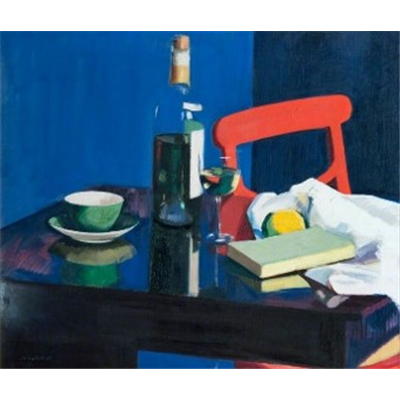 |
During the 1880s the city of Glasgow emerged as a major cultural centre rivalling the nation’s capital, Edinburgh. New money and a determination to collect modern art provided great opportunities for a generation of up-and-coming artists. Now known as the Glasgow Boys, this group included James Guthrie, Atkinson Hornel, George Henry, and John Lavery. Influenced by Japan, contemporary French Impressionism and Dutch Naturalist paintings, these artists brought a breath of fresh air to Glasgow. They adopted en plein air painting and escaped to the countryside to find scenes of interest to paint. With a first degree in archaeology and a PhD in English, Anne was a senior lecturer in Art and Design History at Southampton Solent University for 14 year. She has curated four national exhibitions, including Ancient Landscape, Pastoral Visions: Samuel Palmer to the Ruralists (2008), The Truth About Faeries (2009-11), Under the Greenwood: Picturing the British Tree (2013) and Beyond the Brotherhood The Pre-Raphaelite Legacy (2019-20). Her book on The Perseus Series accompanied the Edward Burne-Jones exhibition (2018, Tate Britain). Anne has also published over a hundred academic papers and has held several prestigious fellowships. Currently a guide and lecturer, Anne specialises in Art Nouveau and Arts and Crafts art tours. Her career as an international speaker has taken her all over the world, including Jersey, Spain, Germany, New Zealand, Canada and the USA. She undertook her sixth lecture tour for ADFAS/ArtsNational Australia in 2024. |
|
| Thursday 25 February 2027 |
| Persepolis: Art, architecture and ideology of the Persian Empire |
| James Renshaw |
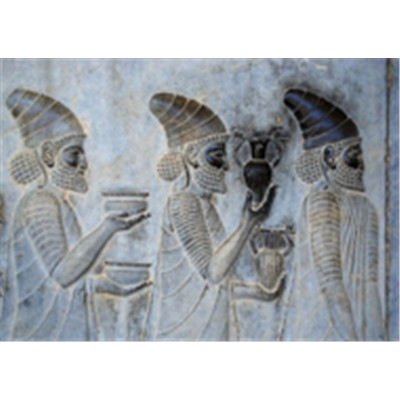 |
The Persian empire exploded into life during the middle of the 6th century BC and was the largest empire in the world for the next two centuries. It stretched from the Mediterranean in the west to the Indus valley in the east, from the Eurasian steppes in the north to Egypt and Arabia in the south. In around 515, its third Great King, Darius I, commissioned the building of a new city, Persepolis, with his palace at its centre. We know a great deal about this palace, and one of its central features, the Apadana Staircase, can be seen in replica in the British Museum. What can this palace and its art tell us about the ideology of this extraordinary and influential empire? Following a degree in Classics from Oxford University, James has taught Classics at secondary school level since 1998, most recently at the Godolphin and Latymer in London; where he ran the school’s Ancient World Breakfast Club, which has an ethos similar to that of The Arts Society. Since 1998, he has published a number of textbooks related to the classical world, including In Search of the Greeks and In Search of the Romans. In addition to his school teaching, Ihe has lectured for the V&A Academy, most recently on its Art and the City: Antiquity to Renaissance course. He has also been a Council Member for the Hellenic Society and the Roman Society. He is currently working on a book due out in 2027 on the history of the marathon race. The Marathon: an Epic History seeks to chart how stories from the battle of Marathon in 490 BC led to a new 'marathon' event at the first modern Olympics in 1896, and how this event has gone on to become a sporting craze. |
|
| Thursday 25 March 2027 |
| Springs, Gears and Genius: The Golden age of the Automaton |
| Roger Mendham |
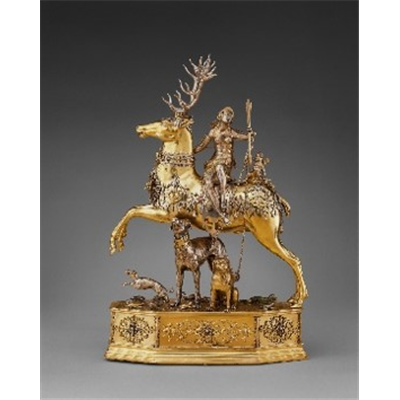 |
This lecture looks at the evolution of those wonderful, complex objects that sought to mimic life long before the word "robot" was coined in 1920. The development of spring driven clockwork mechanisms in the mid15th century opened the opportunity for amazing new ‘Automatons’. From animated figures to models of galleons that would move down the dining table, accompanied by music, animation and even canons that fired – these automata were designed to entertain and, more importantly, impress as objects of status, wealth and modernity. A keen and accomplished photographer Roger has gained Distinctions from the Royal Photographic Society and has recently completed 3 years as President of the Surrey Photographic Association. His artistic taste is predominantly 20th century and he is particularly interested in the visual aspects of art. He has studied the evolution of photography from its earliest days in the early 1800s to becoming a major art form in the late 20th and now 21st centuries. An experienced public speaker, his talks are all richly illustrated with both his own and images from some of the leading photographers in history |
|
| Thursday 22 April 2027 |
| 18th Century England through the eyes of Canaletto |
| Nick Salmond |
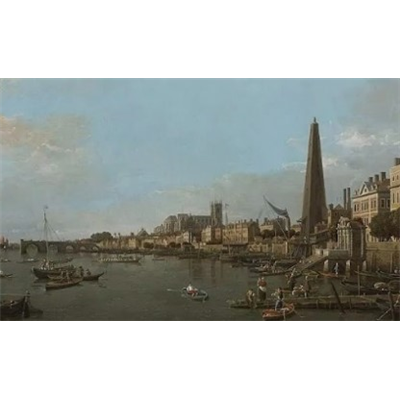 |
The great Venetian artist Canaletto spent ten years living in London producing wonderful landscapes of the city and its surrounds. In this lecture, we explore his time in the capital and look at how his style changed during his long visit. We look at some of the work he produced and explore how the views he captured have changed over the centuries. Nick is a London Blue Badge Guide and a lecturer in History and the Arts. He qualified as a London Blue Badge Guide in 2019, winning the award as Guide of the Year. In 2021 he gave the annual Katrine Prince Lecture to members of the Institute of Tourist Guiding. Before guiding he joined the BBC where he worked for over 30 years in both television and radio. He helped cover some of the great events of History, from the fall of the Berlin Wall to the terrible events of 9/11, from the fall of the Thatcher Government to the celebrations of the Queen’s Diamond Jubilee. |
|
| Thursday 27 May 2027 |
| Kettles Yard - a Masterpiece of Curatorship |
| Sarah Burles |
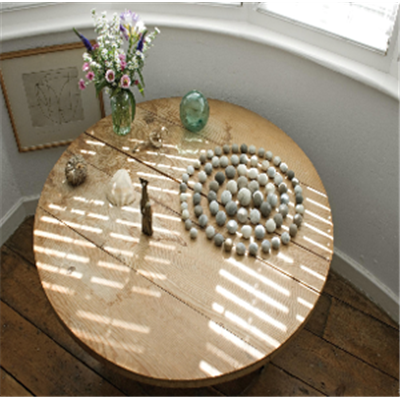 |
Kettle’s Yard in Cambridge has been described as “one of the country’s most intimate and spellbinding museums, the collection of one man and his unerring eye; restorative, homely yet life-changing”. This man was H.S. ‘Jim’ Ede, curator, writer, collector and friend to artists. Sarah Burles studied History of Art at Cambridge University before doing a master’s degree at University College London. She went on to have a career in museum and gallery education, establishing new services in three different museums before working at the Fitzwilliam Museum for many years. Sarah is the founder of Cambridge Art Tours, which runs tours and courses in a winning travel company and has led tours to Italy, France, Germany, Belgium and America. Sarah became an Arts Society accredited lecturer in 2021 and, since then, has given lectures and run study days for Arts Societies throughout the UK, as well as in Germany, Holland and New Zealand. |
|
| Thursday 24 June 2027 |
| Paradise Lost and Restored – 400 years of garden design in Oxfordshire.
|
| Timothy Walker |
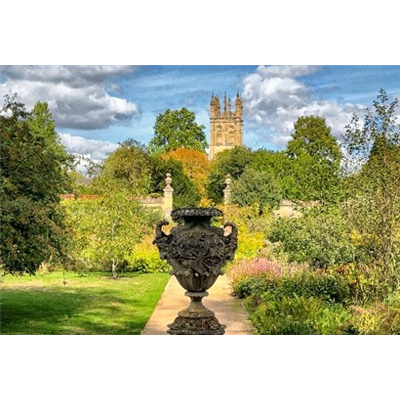 |
The history of garden design through the lens of Oxford Botanic Garden. The history of English garden design can be told in different ways, but rarely can it be told "through the lens" of one garden. Timothy read Botany at University College Oxford. After graduation, he worked as a trainee at Oxford Botanic Garden, the Savill Garden Windsor, and the Royal Botanic Gardens Kew. In 1985 he was awarded a Master of Horticulture by the Royal Horticultural Society of London. From 1988 to 2014 he was director (Horti Praefectus) at the Oxford Botanic Garden. Between 1992 & 2000 the OBGHA won 4 gold medals at the Chelsea Flower Show London. In 2009 the Botanic Garden was awarded a Queen’s Anniversary Prize for providing imaginative educational programmes for adults, students, children, and the general public, thereby breathing new life into education for people of all ages and enriching their lives. In 2010 he was elected as a Fellow of the Linnaean Society of London. In the same year he presented a 3-part series of films on the history of botany on BBC4. Since 2014 he has been a tutor in Plant Biology at Somerville College, Oxford. |
|
| Thursday 22 July 2027 |
| Wee folk, Good Folk:Fairies and folk tales in Victorian and Edwardian Art |
| Kirsty Hartsiotis |
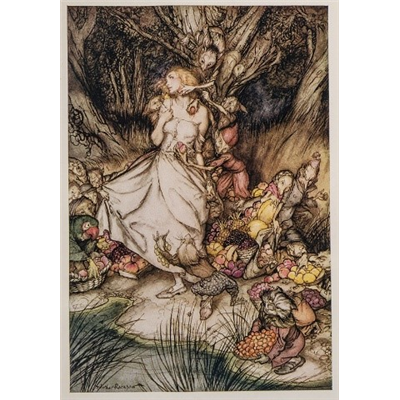 |
Discover the great age of fairy and folklore painting and illustration in Victorian and Edwardian art. The Victorians and Edwardians loved fairy tales and were rediscovering the folklore of the places around them. It was the great age of fairy and legendary painting, but also of gift books and illustration. We'll explore the work of artists from Richard Dadd's dark fantasies to Walter Crane's bright toy books and into the riches of the Edwardian age with illustrators such as Arthur Rackham, Edmund Dulac and many more - as well as looking into the psychology of why fairy tales became so important in this modern age. Kirsty Hartsiotis was the curator of decorative and fine art at The Wilson Art Gallery and Museum, Cheltenham from 2008 to 2023. She is currently a curator at Swindon Museums, where she also worked prior to 2008. At Cheltenham she looked after the Designated Arts and Crafts Movement collection, which includes the important private press archive, the Emery Walker Library. She’s curated many exhibitions on the Arts and Crafts and Private Press Movements as well as on modern art movements, such as A Very British Art Revolution. Passionate about sharing her deep love for, and knowledge of the arts, she’s also a freelance researcher, currently researching the work of Arts and Crafts designers in churches in the South West, and working on a book about Arts and Crafts' stained glass in the Cotswolds. She’s also been an oral storyteller for over 20 years, and has published a number of collections of stories. She is a regular columnist for Cotswold Life, writes for diverse other publications on art history and folklore, and was the newsletter editor for the Society of Decorative Art Collections. |
|
| Thursday 23 September 2027 |
| A History of Inuit Art in the Canadian Arctic |
| Henrietta Hammant |
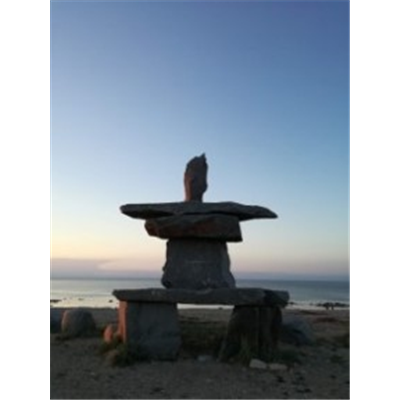 |
This lecture traces the history of Inuit art in Canada from the decoration of practical objects thousands of years ago to the production of the large charismatic stone carvings and wood-cut prints that we recognise today. It particularly considers the surprising impact of the Canadian government on the production of this distinctive artistic style. Henrietta Hammant is a museum anthropologist with a love of the polar regions. She holds degrees in Archaeology and Anthropology from the University of Cambridge, and Visual, Material and Museum Anthropology from the University of Oxford. Recently, she has completed her PhD in the Anthropology of Heritage at the University of Reading, with a focus on Heroic Age Antarctic explorers and their representation in British museums. She has worked in museums across Canada and the UK, including as Assistant Curator at the Itsanitaq Museum in Churchill, Manitoba, and Collections Coordinator at the Polar Museum, part of the Scott Polar Research Institute in Cambridge. She has visited Antarctic twice as a cruise ship lecturer, receiving audience reviews of 93%. She is now an Impact Fellow at the University of Nottingham, working to decolonise Nottingham City Museums and Galleries’ collection of North American ethnographic objects. |
|
| Thursday 28 October 2027 |
| Time Machines, Clocks in Art in Literature from 1300 - now |
| Christina Faraday |
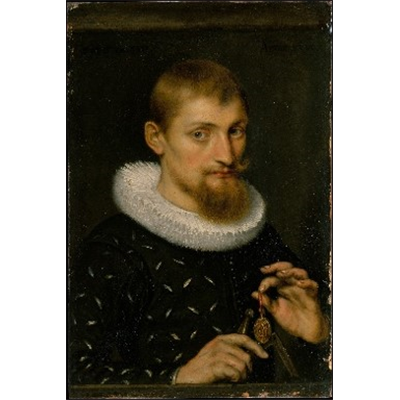 |
Few people nowadays give more than a second thought to their clocks: practical, sometimes beautiful, devices that form the background noise of our daily lives. But from their introduction in the thirteenth century onwards, clocks have held a variety of philosophical and social meanings. This talk explores the visual and literary uses of the clock, the varied meanings it could hold throughout the ages: as an ominous symbol of oncoming death, but also as a metaphor for the soul, for capitalism, and for the good use of time. Dr Christina Faraday FSA FRHistS is a historian of art and ideas, specialising in Tudor and Stuart Britain and the wider 16th and 17th-century world. She is an Affiliated Lecturer in History of Art at the University of Cambridge, a Trustee of the Walpole Society for British art history, and a BBC New Generation Thinker, appearing regularly on BBC Radio 3 and in other popular media. She is the host of British Art Matters podcast, and from 2020-2025 she was a Research Fellow in History of Art at Gonville and Caius College, Cambridge. She is an experienced lecturer, teaching for the History of Art Department at the University of Cambridge, The Wallace Collection, the National Gallery, London, and for Professional and Continuing Education at Cambridge, where she is Co-Director of the MSt in History of Art and Visual Culture. |
|
| Thursday 25 November 2027 |
| Akhenaton- Revolutionary Ruler of Ancient Egypt |
| Vicky Baily |
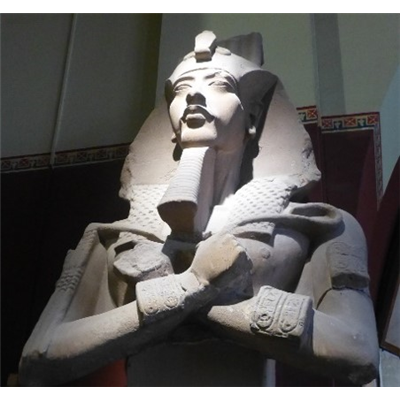 |
Akhenaton stands out today as one of the most notorious rulers of Ancient Egypt. In his short reign he revolutionised the religious system of Egypt and set up a new capital city at the site known as Tell el-Amarna, along with his wife, Nefertiti. The works of art which emerged from his regime are completely unique and emphasise his status today as the only monotheistic pharaoh in the whole 3,000-year history of Ancient Egypt. Vicky became a London Blue Badge Tourist Guide in 2005, receiving an award as the 'Best Guide in Gallery Exams'. One of her main areas of interest is Ancient Egypt. She has studied hieroglyphs and carries out volunteer work in the Egyptian department at the British Museum. She lead specialist tours at relevant sites across London and also delivers lectures on this subject. Highlights of her guiding career have included giving a talk on BBC Radio 4 about the execution site of Tyburn and writing a book on the British monarchy. |
|
| Thursday 9 December 2027 |
| A Tudor Christmas |
| Siobhan Clarke |
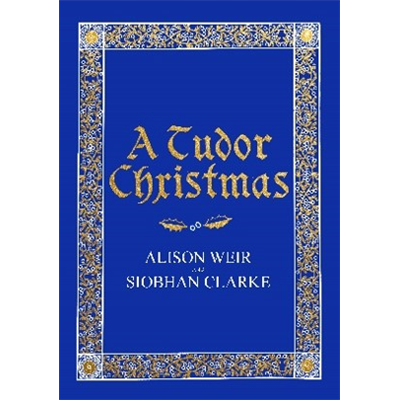 |
We might assume that our modern Christmas owes much to the Victorians. In fact, carol-singing, present-giving, mulled wine and mince pies were all just as popular in Tudor times. This lecture is based on my book with Alison Weir 'A Tudor Christmas'. It was a twelve-day-long festival, over which the Lord of Misrule held sway; so beloved by English people that its traditions survived remarkably unchanged in an age of tumultuous religious upheaval. Siobhan Clarke BA Hons has worked for Historic Royal Palaces for 20 years delivering tours and lectures on Hampton Court, Kensington, the Tower of London and the Banqueting House, Whitehall Palace. Her experience includes education sessions and tours for schools, universities, corporate and private clients. She has lectured for the British Museum, National Trust, National Archives and the Smithsonian and featured on BBC Radio 'Woman's Hour' and Television's 'Secrets of Henry VIII's Palace'. |
|